I was recently invited by Midlands Insider editor Kurt Jacobs to take part in a round table discussion with a group of senior directors and business owners, hosted by Alvarez & Marsal. The conversation was frank, wide ranging and inciteful. What struck me most was not the diversity of the industries represented, but how much common ground there was. Regardless of sector, every leader around that table was navigating the same headwinds and the message was clear: the next two years will test businesses in ways that demand more than just resilience. They demand a willingness to think and operate differently.
The challenges facing Midlands businesses right now are multifaceted They are felt daily in margins, in recruitment pipelines, in energy bills and in the growing weight of regulation. Employment legislation and rising minimum wages are making it harder for SMEs to hire and develop new entrants. Apprenticeships, once a reliable route into skilled work, are increasingly unviable on thin margin contracts. At the same time, wage compression is squeezing experienced staff, making
retention just as difficult as recruitment.
This is compounded by chronic skills shortages that span almost every sector. In our industry, the challenge is acute. Specialist skills in areas like electrical engineering are becoming harder to replace as the workforce ages and retires. Finding people with the right technical ability and the right work ethic is a conversation I have with customers and peers every week.
Then there is the broader economic picture. The tax burden on businesses and individuals continues to grow and nobody around our table could see where the relief was coming from. When you layer on energy costs of around 25p per kilowatt hour, compared with roughly 6 cents in the United States, it becomes clear why domestic manufacturing and operations face a fundamental competitiveness gap.
Geopolitical instability adds another dimension. The war in Iran and wider crisis in the Middle East is not simply an energy cost issue. It carries the potential to disrupt supply chains in ways that could affect everything from defence to food production. Since Covid, procurement priorities have rightly shifted from cutting costs to ensuring reliable supply, and that shift is here to stay.
Against this backdrop, it is no surprise that the consensus around our table was cautious. Most leaders would consider a flat 2026 a good result. Investment appetite is subdued and risk aversion is high. Yet within that picture, there are businesses finding a way through, and it is worth understanding what sets them apart.
How CHH responded
At CHH, we have spent the last three years deliberately repositioning the business. We moved away from being a product led supplier and restructured around a complete solutions model. That decision was driven by what our customers were telling us: they no longer wanted a supplier focused solely on products. They wanted a partner who could take responsibility across the full lifecycle, from design and supply through to deployment, tracking and recovery.
That is exactly what our CHH 360 model delivers. It connects engineering capability, operational delivery and lifecycle oversight within one accountable framework. Rather than treating supply, deployment and recovery as separate functions, we manage them as linked stages within a continuous cycle. This joined up approach allows us to anticipate operational challenges, remove friction between handovers and give customers consistent visibility across their operations.
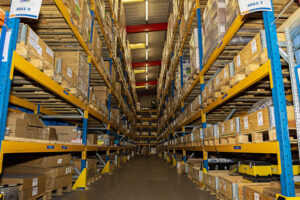
The launch of our Final Mile solution in 2025 was a defining moment. It brought together logistics, asset tracking and reverse logistics into a single integrated offer, addressing the point where operational complexity and risk are often greatest. We expanded our national pick up and drop off network, built a transport fleet of more than 40 vehicles and brought a 40,000 square foot site in Chesterfield into full operation as a reverse logistics hub. That investment helped increase our revenue by around 20% in 2025 and fundamentally shifted how we are perceived in the market.
Critically, we achieved this transition organically, without external investment, while doubling our workforce to around 150 people and strengthening our governance structures. Growth in 2026 is expected to increase turnover by a further 30%.
Embedded within that lifecycle approach is a sustainability strategy that has become a genuine commercial differentiator. By extending the life of assets, reducing waste and keeping resources in the value chain, we are helping customers lower their environmental impact while improving their own ESG credentials. We have backed this up by calculating our baseline greenhouse gas emissions across Scopes 1, 2 and 3, completing a double materiality assessment and publishing our latest Sustainability Report. Customers are increasingly asking for this data as part of procurement. The businesses that can evidence their credentials will win work and those that cannot will lose it.
Technology and the road ahead
One of the liveliest parts of our round table discussion was around AI and technology. Everyone agreed that AI is a great enabler, but that it is only as good as the questions you ask of it and still needs to be fact checked for more detailed work. Over time, it will reshape the jobs market in much the same way robotics did. The real opportunity, though, is not in replacing people but in making operations smarter. At CHH, we are seeing that through digital asset tracking, data led decision making and more efficient logistics. Technology is helping us give customers better visibility over their assets and use that data to drive performance.
At the same time, AI is driving client expectations of lower fees and reduced costs across many sectors, which puts further pressure on margins. The businesses that succeed will be those using technology to solve real operational problems and create value, not simply cutting headcount or chasing efficiency for its own sake.
The outlook is undeniably challenging but the businesses that are well run, well financed and clear about where they add value are well placed to grow. At CHH, we have built that clarity by listening to our customers, investing in our people and having the confidence to challenge the way things have always been done. That is exactly the space we intend to keep occupying.