When an engineer removes a meter from the wall and replaces it with a new one, the old asset still belongs to someone and still has value. In the smart metering industry, regulation requires that asset owners are notified within 30 days and given the opportunity to arrange a return. Getting that process right is essential. Getting it wrong costs time, money and resources that nobody can afford to waste. At CHH, our Life Cycle Solutions capability has been built to solve the practical challenges that surround asset recovery, and to go further than anyone else in the market by giving customers genuine visibility and control over their assets from the moment they leave the wall.
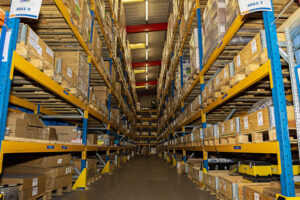
The standard of data across the metering industry is widely acknowledged to be poor. Assets move through complex supply chains involving engineers, vans, lockers, pick-up and drop-off points and warehouses, and at every stage there is a risk of something falling through the gaps. Existing providers typically only report on an asset once it physically arrives at their facility. If it does not arrive, they have no way of knowing whether it is still in the van, sitting in a locker, in transit or lost entirely. Traceability becomes guesswork.
The value of visibility
We took a fundamentally different approach. Through our bespoke mobile app, we capture data at the point of removal. The engineer records the asset serial number, logs the job reference and takes photographs. From that moment, every scan at every stage of the journey is recorded, whether the asset is in a tote, at one of our 600-plus PUDO locations or arriving at a CHH warehouse. That upstream visibility is something others in the market simply cannot offer.
But tracking our own process is only part of the picture. We also take the customer’s own data and reconcile it against ours, giving them a far richer view of where their assets sit across the entire end-to-end chain. We can highlight discrepancies, flag assets we have received that the customer had not accounted for, and use photographic evidence captured by engineers to resolve data conflicts. That level of reconciliation saves significant money on claims and eliminates hours of administrative effort spent chasing answers.
We are investing heavily in data analytics because we know how valuable this information is to our customers. In regulated markets, the ability to demonstrate clear asset traceability and accurate reporting is a competitive advantage. Our approach delivers that.
Onboarding, offboarding and beyond
Asset tracking in metering is only one dimension of our Life Cycle Solutions offer. We also manage the onboarding and offboarding of engineer vans, recovering tools, consumables, PPE and equipment so they can be graded, triaged and redeployed. Items in good condition go to a new starter or an existing engineer. Those that are no longer suitable are passed on to charity partners rather than being lost or thrown away, as was so often the case before. It is a practical process that reduces waste and cost in equal measure.
This same model extends beyond metering. We already manage onboarding and offboarding for EV chargers, bringing units back in for repair or reuse. The national PUDO network and reverse logistics infrastructure we have built lends itself naturally to solar, heat pumps and other emerging sectors that others in the industry have struggled to service effectively. Our network is flexible in terms of location, size and contract length, and it continues to expand.
Keeping resources in play
Extending the useful life of assets and keeping materials circulating within the value chain is not just operationally sensible. It is central to how we think about responsible business. CHH’s sustainability strategy is embedded in how we operate, and our Life Cycle Solutions capability is one of its clearest practical expressions. By recovering, triaging and returning assets for refurbishment or recycling through trusted third-party partners, we reduce the volume of material heading to landfill and cut the emissions associated with manufacturing replacements.
In partnership with industry experts, we are also exploring viable commercial solutions for one of the metering sector’s greatest challenges: battery replacement. This is part of a deliberate and ongoing effort to evolve our offer in line with both customer need and circular economy principles.
For our customers, the sustainability benefits are tangible. Lower material waste, reduced emissions from premature replacement, improved reporting transparency and stronger ESG credentials all flow from better life cycle management. When assets are tracked, recovered and redeployed rather than written off, the environmental and financial returns compound.
CHH is committed to challenging the status quo in how assets are managed across their full life cycle. Our combination of upstream data visibility, customer data reconciliation and structured recovery is a genuine market differentiator, one that addresses real pain points while keeping valuable resources in productive use for longer. That is what life cycle thinking looks like in practice.